

Article
Retail & eCommerce
8 min read
If you run an eCommerce business (or work in one), you’ve probably had that gut-dropping moment at 2 a.m. when you realize that something has gone seriously wrong. Perhaps a major promotional campaign has failed, customers are complaining about failed payments, or worse, you open your inbox to find a very polite (but terrifying) email about PCI DSS, GDPR, or missing documents from a tax authority.
If that hasn’t happened to you yet… give it time. It will.
Most of us only start digging when the fire alarm is already screaming. An eCommerce audit is the boring-sounding thing nobody wants to do — until they desperately wish they had. It’s basically the yearly physical for your store: catch the little problems while they’re still cheap and painless, instead of doing open-heart surgery later when investors, lawyers, or the press are watching.
TL;DR (Key Insights):
An eCommerce audit is a structured online store audit of security, payments, compliance, fraud, and continuity.
It focuses on eCommerce platform security, online payment security audit & PCI DSS compliance, and customer data protection eCommerce (GDPR, ISO 27001/27701).
It also covers zero trust architecture eCommerce, eCommerce business continuity, and eCommerce fraud prevention & security awareness.
In practice, it’s what kept platforms like PRSNT, LENSA, and Kupatana stable during high-traffic campaigns, mobile-driven revenue, and millions of monthly users.
What is an eCommerce audit?
An eCommerce audit is a structured review of your platforma eCommerce — website, mobile app, ERP, payment gateways, marketing tools, and logistics systems — treated as one connected system. It’s the digital equivalent of auditing in commerce: not just looking at numbers, but analysing how the whole machine behaves under load, during campaigns, and under regulatory pressure.
A good eCommerce audit gives you a clear, executive-level view of:
where you are exposed (security, PCI DSS, GDPR, vendor/API risk),
where you leak revenue (failed payments, checkout friction, unstable UX), and
what must be fixed first (a prioritized roadmap, not a random ticket list).
Whether you run a custom stack or perform a Shopify audit, the goal is the same: understand your real risk surface and fix the issues that matter most for revenue, trust, and compliance.
Market reality for EU-linked stores
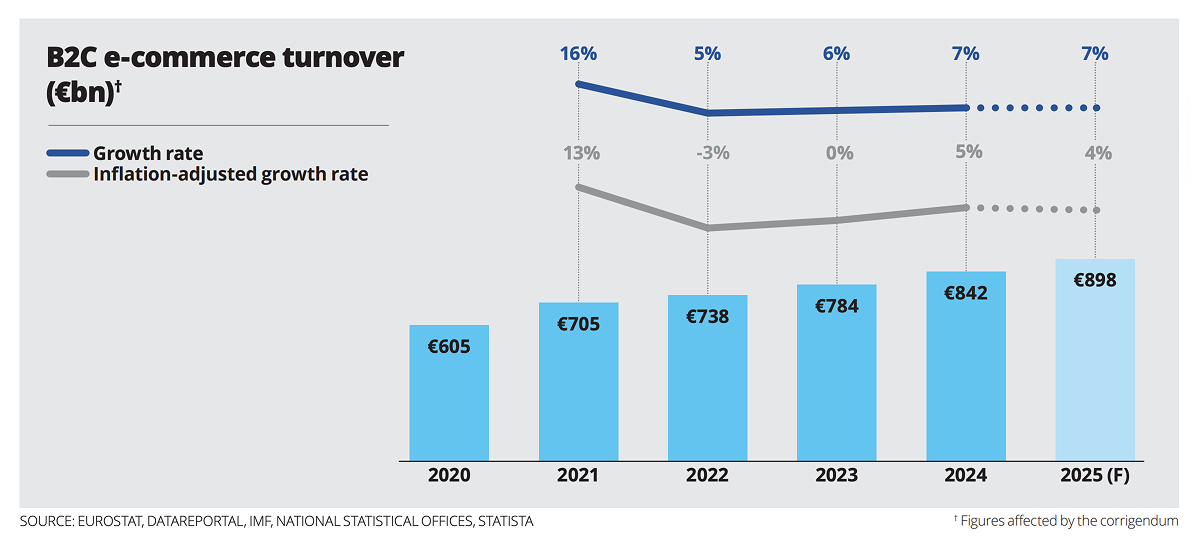
eCommerce is doing really well in Europe at the moment, which is great for business. Solely the B2C eCommerce turnover rose 7% in 2024 to about €842 billion, which means more orders, more payment volume, and more third-party tools plugged into every store.
But there’s a catch with this growth – it also opens up more space where things can go wrong:
cybersecurity exposure (from e-skimming to account takeover),
regulatory pressure (GDPR, PCI DSS, PSD2/SCA, NIS2, DORA), and
operational risk (payment outages, logistics bottlenecks, data loss).
Zooming in on Central and Eastern Europe, Moldova and Romania show how this plays out in practice. In Moldova, online sales of products and services reached about €358.6 million in 2023, with 15.2% year-on-year growth and several hundred active online stores. In Romania, the eCommerce market reached €7.7 billion in 2024 and is expected to surpass €8 billion in 2025, growing around 8% annually (translation: both markets are growing faster than many teams can reorganise their systems).
On paper, this looks purely positive. In reality, many EU-linked merchants here are still juggling a patchwork of legacy ERPs, courier portals, custom plugins and manual reconciliations (think: “it works, but nobody fully owns the whole flow”). As cross-border orders grow, customers and partners expect EU-level reliability and compliance, no matter how young or fragmented the underlying stack is.

An audit is not a checklist. It reveals the issues that can realistically stop revenue or block growth. — Olga Petrașcu, Commercial Business Partner, EBS Integrator
In this context, every new integration, campaign, or payment method adds both upside and fragility (more moving parts = more ways something small can break at the worst time). A single misconfigured API, unpatched plugin, or missing data-processing agreement can turn into a revenue-stopping incident.
The Big 5 of an eCommerce audit
A practical eCommerce audit framework usually covers five pillars of digital commerce security and online merchant risk management:
Platform security & eCommerce vulnerability assessment
Online payment security audit & PCI DSS compliance eCommerce
Customer data protection eCommerce (GDPR, ISO 27001/27701)
Zero trust architecture & eCommerce business continuity
eCommerce fraud prevention & security awareness training
Skip one, and it tends to explode later — usually during peak season or a regulator review.
eCommerce vulnerability assessment
This part of the audit looks at online retail cybersecurity: how your shopping experience behaves under real-world pressure. A solid eCommerce vulnerability assessment will:
map critical flows from catalog to checkout and order confirmation;
inspect checkout page vulnerabilities and third-party scripts (e-skimming, Magecart-style attacks);
review shopping cart security and merchant account security in admin;
test key APIs and plugins against common OWASP issues.
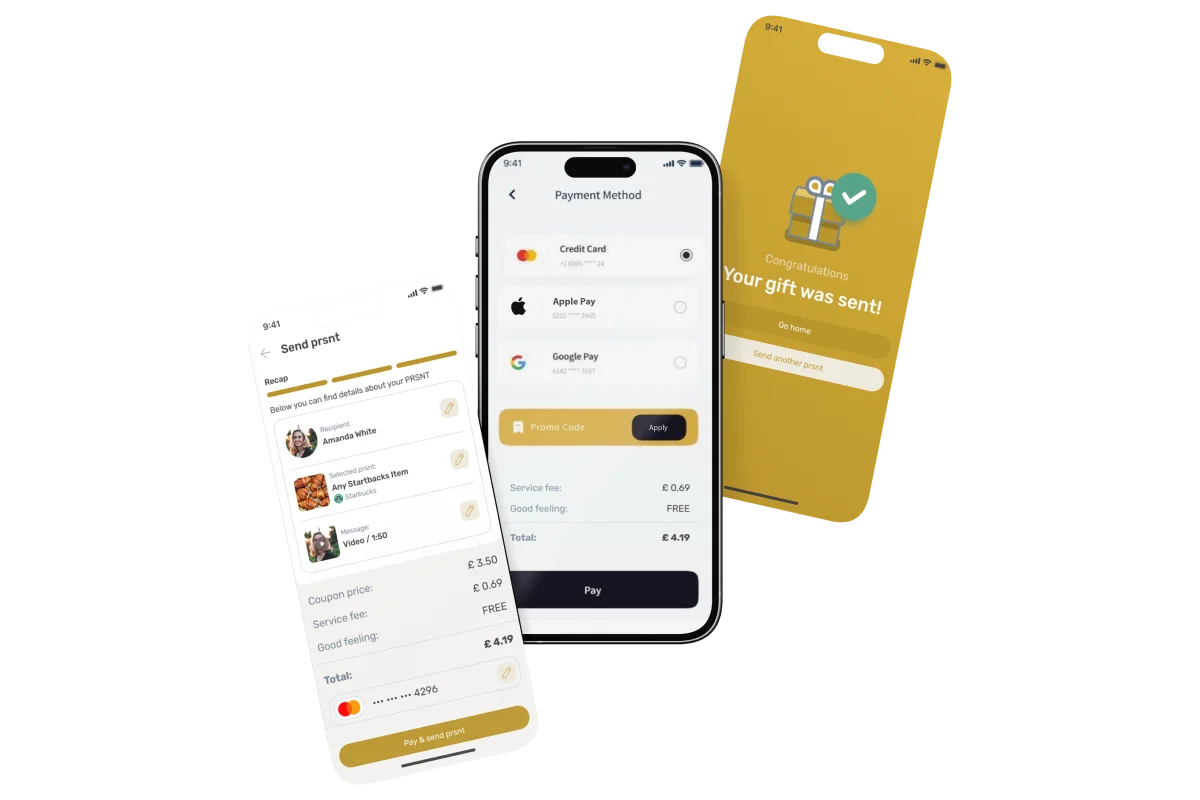
On the PRSNT gift-giving application, we refactored an unfinished MVP, addressed GDPR gaps, and rebuilt integrations to prevent campaigns from breaking the system. The result: an automated promo sent 12,000+ gifts without checkout failures or data exposure — a clear example of eCommerce security ROI and online sales protection.
Online payment security audit & PCI DSS compliance
For most retailers, payments are where security, regulation, and revenue collide. An online payment security audit typically checks:
how card and wallet data flow from browser/app to PSP and back;
PCI DSS v4.0 requirements on script inventory and tamper monitoring for payment pages;
tokenization and encryption boundaries;
payment gateway compliance across PSPs, acquirers, and local methods.
It also reviews PSD2 Strong Customer Authentication (SCA) and 3DS2 setups: routing, exemptions, and failure handling. Done well, this becomes eCommerce conversion optimization security — staying compliant without messing up approvals or UX.
What is ISO 27001, 27701 for eCommerce? (EU Standards)
For online retail, the most relevant ISO standards for e-commerce are:
ISO 27001 — information security management;
ISO 27701 — privacy and PII management on top of 27001.
An audit aligned with ISO 27001 certification in Romania eCommerce checks access control, backup/restore, logging, incident response, and vendor DPAs against these expectations.
But that's not all of it.
On top of ISO, a serious eCommerce regulatory compliance review tracks:
GDPR: consent, cookie governance, data-subject rights, 72-hour breach process;
NIS2: EU-wide baseline for cybersecurity risk management and reporting, as summarized by ENISA’s guidance on NIS2 implementation;
DORA: operational resilience for finance-linked services and ICT providers, described in EIOPA’s overview of the Digital Operational Resilience Act.
For retailers embedding payments, BNPL, or financial products, these rules increasingly shape how “good enough” security looks.
Zero trust, continuity & fraud
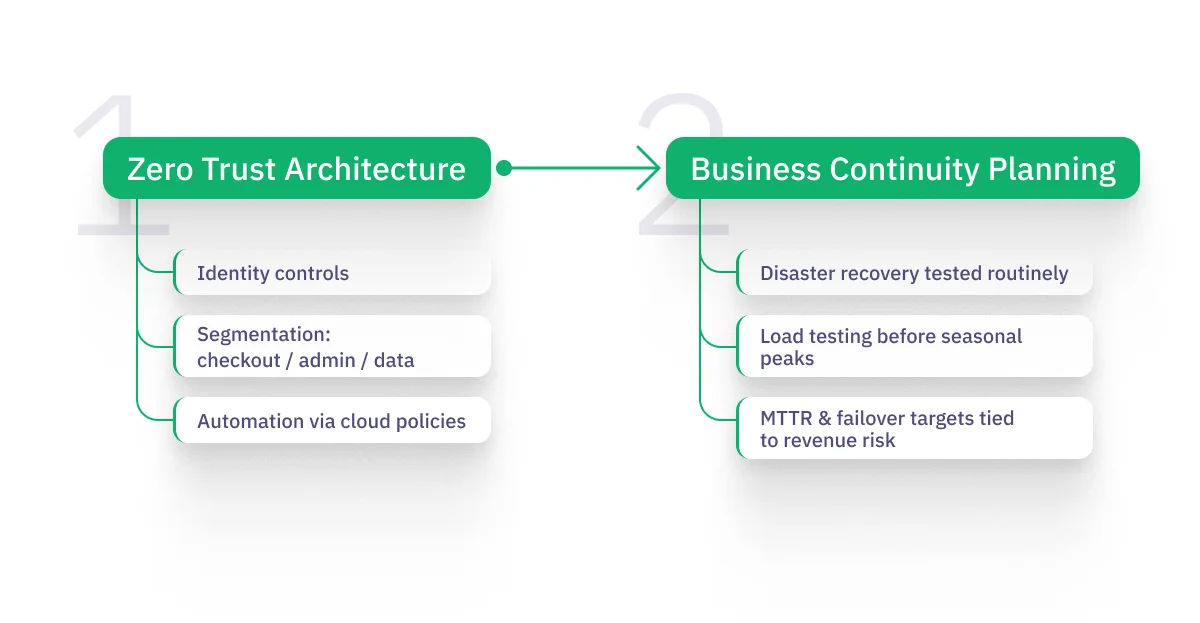
A zero trust architecture eCommerce approach assumes no automatic trust: payment, PII, and admin zones are segmented; MFA and least-privilege access are enforced; and access is logged and monitored.
From there, eCommerce business continuity asks:
If a PSP, cloud region, or key integration fails during a campaign, how fast does checkout recover — and have we tested it before Black Friday?
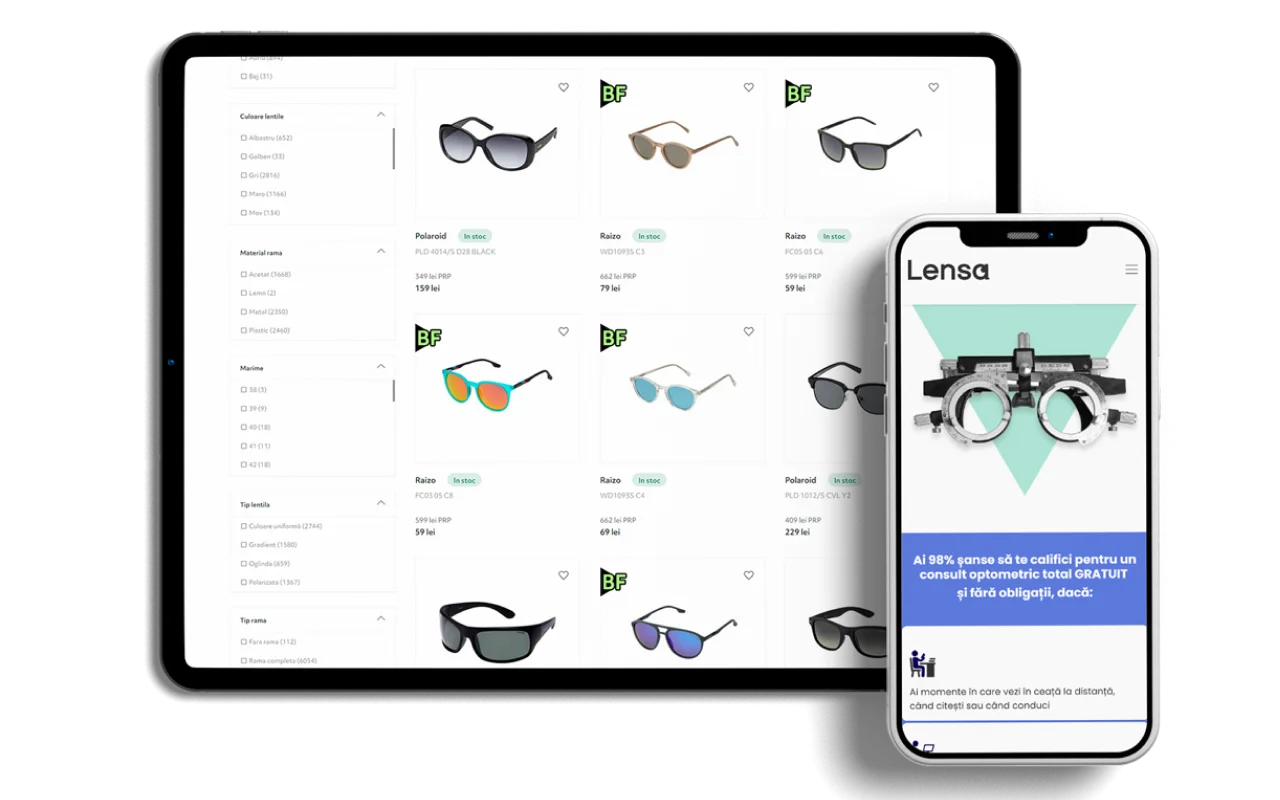
For the LENSA digital optical showroom, we helped build a mobile-first channel that now drives roughly 40% of total sales. At that point, continuity and segmentation aren’t “IT extras” — they are core to online sales protection and customer trust in eCommerce.
On the human side, eCommerce fraud prevention and cybersecurity awareness cover:
credential stuffing and account takeover;
promo and coupon abuse;
card-not-present fraud and chargebacks;
business email compromise risks in finance and ops.
The ROI of an eCommerce audit
For executives, the question behind all this is simple:
Does it pay off?
A well-run eCommerce audit reduces eCommerce data breach costs, improves stability, protects customer trust, and delivers a ranked roadmap of fixes — from platform hardening and PCI work to ISO-aligned processes and awareness training.
If you’re not sure where to start, the most efficient entry point is a structured business analysis + eCommerce audit: mapping your processes, platforms, and regulatory exposure in one view. That’s exactly what our Business analysis for eCommerce and retail service is designed to do — align technology, risk, and growth priorities before you commit budget to the wrong problems.
Share this article on:

Event
FinTech
Software Development
Systems Integration
Regulatory & Compliance
7 min read
How we built a crypto wallet app (x Oobit) that enables instant tap-to-pay Bitcoin purchases at any store and scales to $700K/month. Learn from our success story.

Article
Cross-industry
AI Consulting
Regulatory & Compliance
7 min read
Is AI overhyped? Yes, as a purchase promise. No, as what a prepared company can do with it. The evidence, and what the first step off level zero takes.

Article
FinTech
AI Consulting
Data Engineering & Analytics
Regulatory & Compliance
5 min read
AI in fintech is everywhere, yet few systems would survive an audit. Why projects stall, what regulators expect, and the three steps that fix it.

Article
EdTech
Security
Regulatory & Compliance
11 min read
Student records are among the most sensitive data any institution holds, and the easiest to underprice. What a school breach really costs, and where to start
Article
FinTech
Systems Integration
Regulatory & Compliance
8 min read
How Open Banking works after PSD2 and what the API economy means for banks, instant payments, and system architecture in Europe.

Article
Retail & eCommerce
Business Strategy
Digital Transformation
9 min read
TikTok and Instagram now drive product discovery across the EU. See how social commerce is replacing search, and insights into MD/RO market for brands to convert with a strong infrastructure.

Article
FinTech
Process Automation
Systems Integration
Regulatory & Compliance
9 min read
Banking process automation enables financial institutions to replace manual approvals with low-code workflows that integrate payments, lending, and compliance in real-time. It ensures PSD2 and KYC/AML compliance while enabling instant payments, such as SEPA Instant and Moldova's IPS, for faster and safer banking.

Event
Cross-industry
Business Strategy
IT Consulting
4 min read
Everyone knows Romania and Moldova for good code at low cost. At Nexus 2025, they showed something else: strategic value at the system level.

Article
Cross-industry
IT Consulting
Business Strategy
6 min read
Learn how consulting has changed, and why it works better than traditional approaches.

Article
Cross-industry
Digital Transformation
Business Strategy
8 min read
Digital transformation is about building smarter, stronger ways of working—operationally, technically, and culturally. Giving your team new technology, with a clear understanding of its purpose and value. Vitalie Aremescu, Founder and share his expertise in helping businesses adapt and thrive in today’s market.

Article
Retail & eCommerce
Business Strategy
Digital Transformation
Data Engineering & Analytics
7 min read
Learn about personalized customer experiences, data-driven decision-making, omnichannel approaches, AI/AR and real stories of how we help businesses implement new business models.

Article
Cross-industry
Software Development
Business Strategy
8 min read
See how mobile apps can boost your business growth. Some remain unaware or have tried without success, but our tech leads in iOS & Flutter prove that modern app development truly works.


News
Cross-industry
Business Strategy
Digital Transformation
6 min read
EBS Integrator evolved naturally, driven by a deeper impulse to adapt and grow. CEO Vitalie Aremescu founded the company in response to this fundamental sense of evolution. "I realised that I needed to evolve," Aremescu shares in an interview with Wall-Street.ro. Today, that same impulse continues to run a company that not only provides technology expertise, but also teaches others the importance of evolving in an ever-changing environment.

Article
Cross-industry
Digital Transformation
Business Strategy
10 min read
Companies involved in the movement of goods and the management of logistics are undergoing major changes to keep up with the demands of today's customers and the rapid pace of change in the marketplace. What they're doing is making extensive use of digital technologies - that is, using computers, the Internet and other digital tools not just to improve the way they work, but to fundamentally change the way they operate, interact with customers and run their businesses.

Article
Retail & eCommerce
Security
Regulatory & Compliance
8 min read
We’re talking about data privacy in all its glory – why it matters to you and your customers, and where it’s all heading in the future. Because this is a part of a series, we’ll try and focus mostly on the aspects that affect us in the eCommerce domain! Let’s discuss why there’s so much hubbub around the topic of data privacy. This is not to say this discussion is anything new for the world, it’s been brought up countless of times, and the issue of “government spying” on you is as old as the idea of structured government is.

Article
Cross-industry
Emerging Tech
Business Strategy
7 min read
2018 is becoming quite promising for augmented reality (AR) and this goes way beyond Pokemon Go. AR is changing the world of consumer marketing. It empowers stakeholders and clients to experience products and services as “prescribed”. It acts as “a sibling” to Virtual Reality platforms aiding physical reality with virtual objects. This way AR is delivering a new, interactive customer experience. Unlike other hypes we’ve seen rising, this tech is here to stay with figures expected to reach $117.4 billion by 2022.
Article
Cross-industry
Security
Regulatory & Compliance
In this article, Alex shares his journey through the implementation of a Clean Desk and Clean Screen Policy during his company's ISO 27001 certification process. Initially resistant to the changes, Alex reflects on the impact of the policy on his workflow, physical security habits, and overall job experience. The transition, while initially perceived as a challenge, ultimately led to a cultural shift within the company, emphasizing the importance of information security and organizational efficiency.