

Article
FinTech
5 min read
AI in fintech has a strange scoreboard right now. Adoption looks like a solved problem: the European Banking Authority observes that 92% of EU banks are already deploying AI, and more than half already run generative or agentic AI in consumer-facing processes [1]. Yet ask what actually reached production with results a board would sign, and the room goes quiet. This guide is about the gap between those two facts and the data foundation that closes it.
the short version:
Nearly every EU bank now runs AI somewhere, yet banks remain "stuck in pilot mode": fintechs are 40% of the market but run 70% of the AI initiatives [1][2].
The blocker isn't model quality. The EU banking supervisor names input data quality, data governance and human oversight as the top challenges [1], and McKinsey's prescribed fix is data foundations, not better models [2].
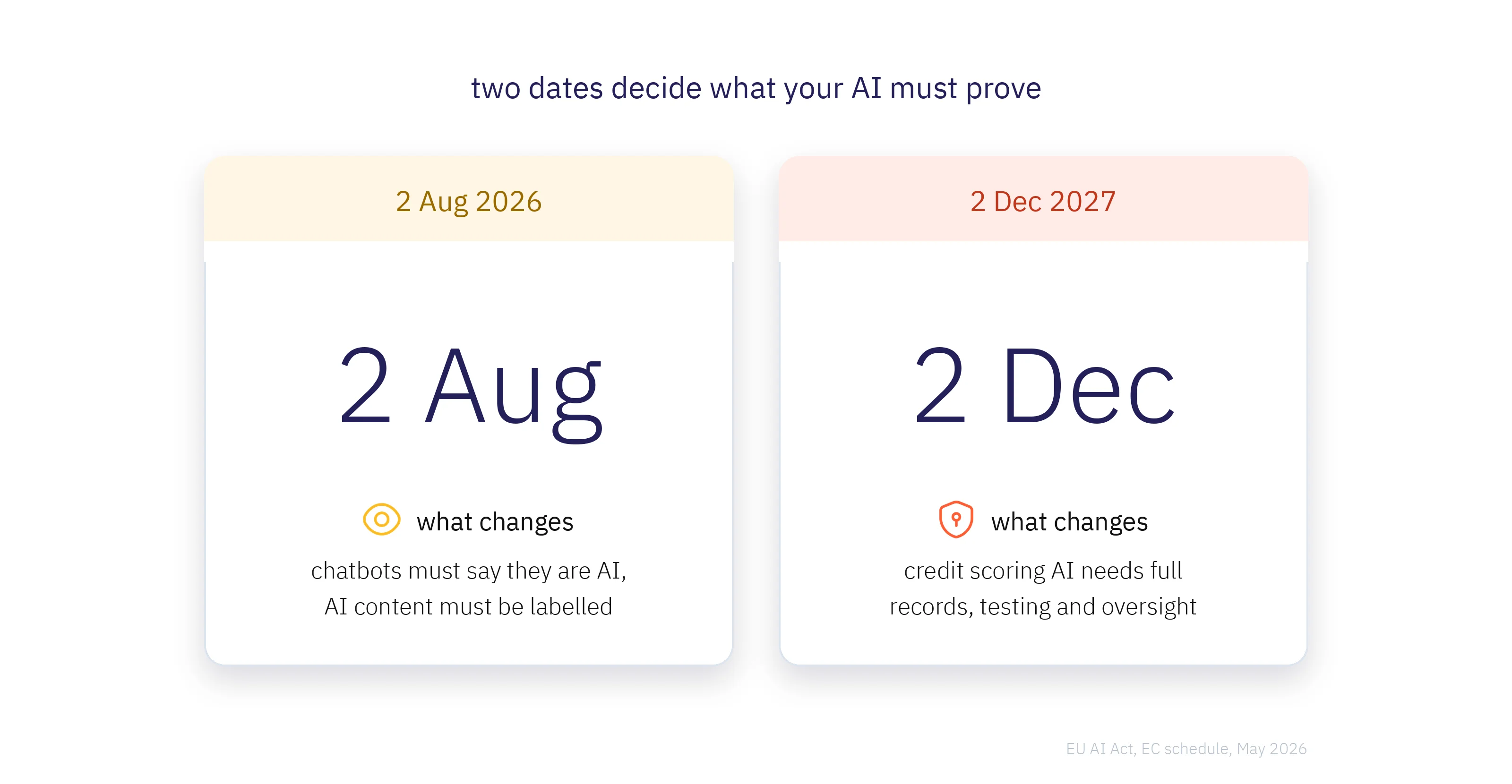
The clock is regulatory and dated: AI transparency obligations apply from 2 August 2026 and the high-risk regime, which includes credit scoring, from 2 December 2027 [3].
The reassuring part: getting production-ready is a sequence, not a budget. Data lineage first, performance monitoring second, and decision logging third, proven on one process.
The gap between the AI in fintech pitch and what's actually in production
McKinsey looked at 600+ AI initiatives across roughly 10,000 banks and fintechs and found a telling split: fintechs make up about 40% of the dataset but account for nearly 70% of the AI initiatives [2]. Banks, in McKinsey's own words, "remain stuck in pilot mode, testing promising concepts but struggling to move them into production."
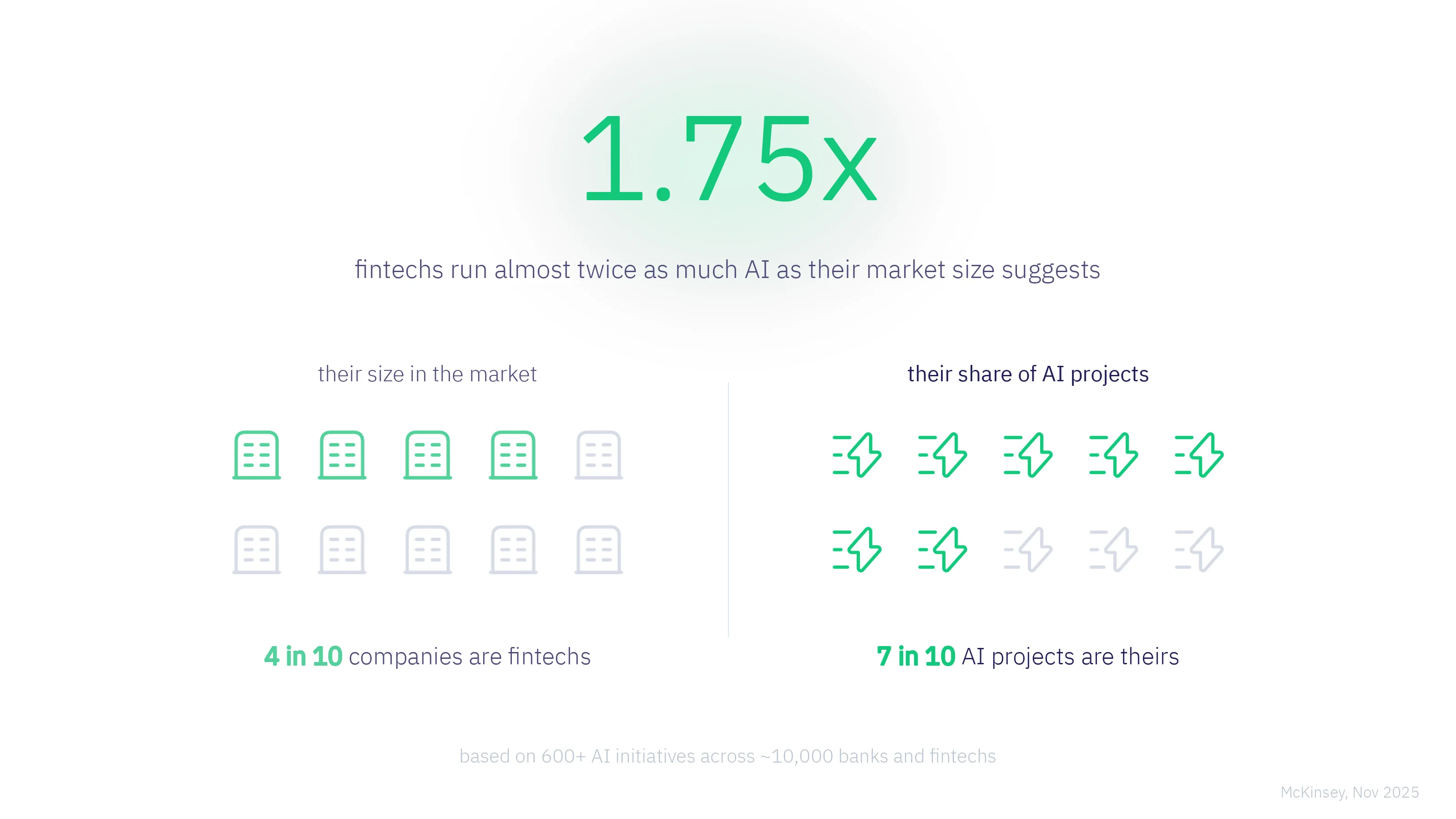
The prescribed fix, verbatim from the same research: building the data foundations, governance, and cross-functional delivery models needed for enterprise-wide deployment [2]. Not better models. Foundations.
The industry conversation has caught up to this. As Vitalie Aremescu, founder of EBS Integrator, observed after this year's RAISE Summit in Paris: 2025's question was whether companies would use AI at all. 2026's question is how you govern and control what you've already deployed. Adoption stopped being the story. Control became it.
Why AI and big data initiatives stall before production
When the EU banking supervisor surveyed the sector, the top challenges it recorded weren't about model quality. The EBA names them directly: reliance on third parties, the quality of input data, adequate data governance, and human oversight [1].
Notice what that list has in common. Every item is about the data and the structure around the model, not the model. A pilot can ignore all four and still demo beautifully. A production system can't ignore any of them, because production is where the auditor, the regulator, and the angry customer live.
The problem is timing. Governance gets added after the system is already built. On paper the compliance rules read just fine. Transparency, explainability, fairness. But those rules never shaped the architecture, and that shows the moment someone tries to answer a regulator's question with logs that were never designed to answer it.
The three things regulators (and your board) now expect to see
The EU AI Act's schedule makes this concrete: transparency obligations apply from 2 August 2026, and the high-risk regime, which includes credit scoring, applies from 2 December 2027 [3]. Whatever you're building now will live its whole life under these rules. Three capabilities decide whether it survives them.
Data provenance
Which data trained the model, which data it sees at inference, and how the two differ. If you can't answer this, you can't explain a single decision the system makes, no matter how good your intentions were.
Model behaviour in production
Real performance, broken down by segment. Aggregate accuracy hides exactly the failures regulators care about: the model that works on average and fails consistently for one customer group.
Decision audit trails
The ability to reconstruct why a specific decision was made, on demand, months later. This is the difference between an uncomfortable meeting and a finding.
What "big data" has to mean for this framework to work
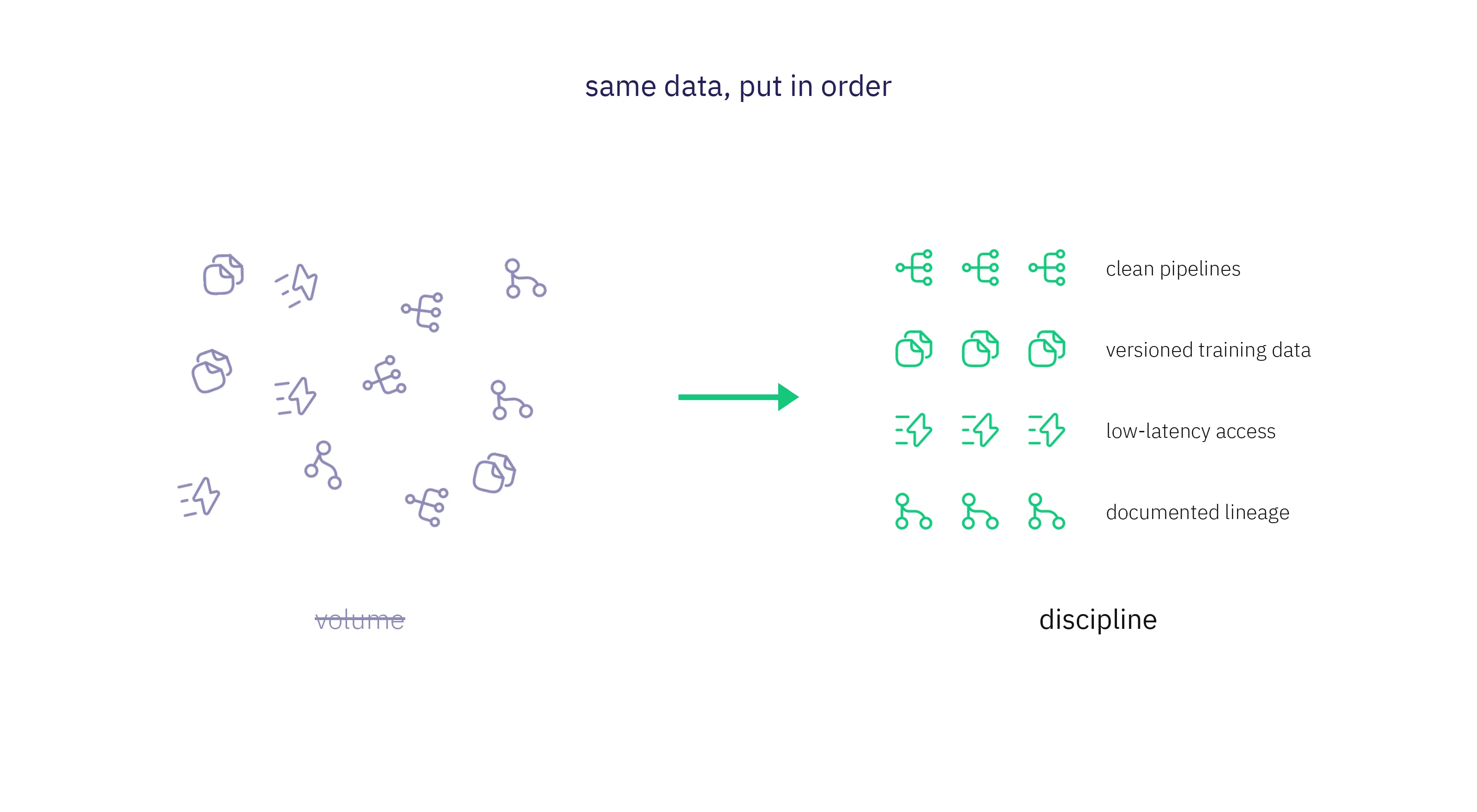
Big data in fintech earns its place next to AI only when it means something specific: clean pipelines, versioned training data, low-latency access, and documented lineage. Not volume. Discipline.
There's a human layer here that the tooling conversation misses. The people who know that a field stopped being reliable after a vendor change, or that a variable quietly encodes something it shouldn't, are rarely in the room when models get scoped. That context lives in institutional memory, not dashboards. AI doesn't just need data. It needs context, and context has owners.
This is also where alternative data belongs: cash-flow patterns and payment behavior widening credit decisions beyond bureau scores. Powerful, and exactly the kind of input that fails an audit if its lineage was never documented. Fraud detection tells the same story: AI and big data catch what rules miss, but only when someone can show which data taught the system what "normal" looks like.
A build sequence, not a pilot
Deployment patterns in tier-one banks have visibly converged on three properties: platforms that are federated (units customize, a central team holds governance), rigorously evaluated before production, and tightly scoped to one use case at a time. You don't need a tier-one budget to copy the sequence. You need the order.
Deployment patterns in tier-one banks have visibly converged on three properties: platforms that are federated (units customise, a central team holds governance), rigorously evaluated before production, and tightly scoped to one use case at a time. You don't need a tier-one budget to copy the sequence. You need the order.
First, data lineage.
Before any model: where data comes from, who owns it, what changed, and when. This is the unglamorous quarter that makes every later quarter possible.
Second, performance monitoring.
Instrument the model's behavior by segment from day one in production. Not because it's required yet, but because retrofitting observability costs multiples of building it in.
Third, decision-context logging.
Every consequential automated decision stores the inputs, model version, and reasoning trail that produced it. When the audit request comes, it's a query, not an archaeology project.Run the sequence on one process. Prove it. Then the second use case inherits the foundation instead of rebuilding it. That inheritance is where the economics turn.
Proof this works in practice
A non-bank factoring lender in the EU started with a manual approval flow and a compliance burden that grew with every invoice. The rebuild automated roughly 90% of the flow: automated KYC against national registries, e-invoice validation, credit-bureau risk feeds, and automatic bank reconciliation, cutting manual work by 55% while holding a 98% on-time SLA. The point isn't the automation. It's that every automated step was built to be verifiable, which is what let a regulated lender trust it with the core of its business. (The client operates under NDA; the numbers are theirs, the name isn't ours to publish.)
The pattern isn't unique to one lender. Publicly documented tier-one deployments show the same convergence: what reaches production and survives is the tightly scoped, verifiable build, not the everything-at-once platform.
The cost of waiting
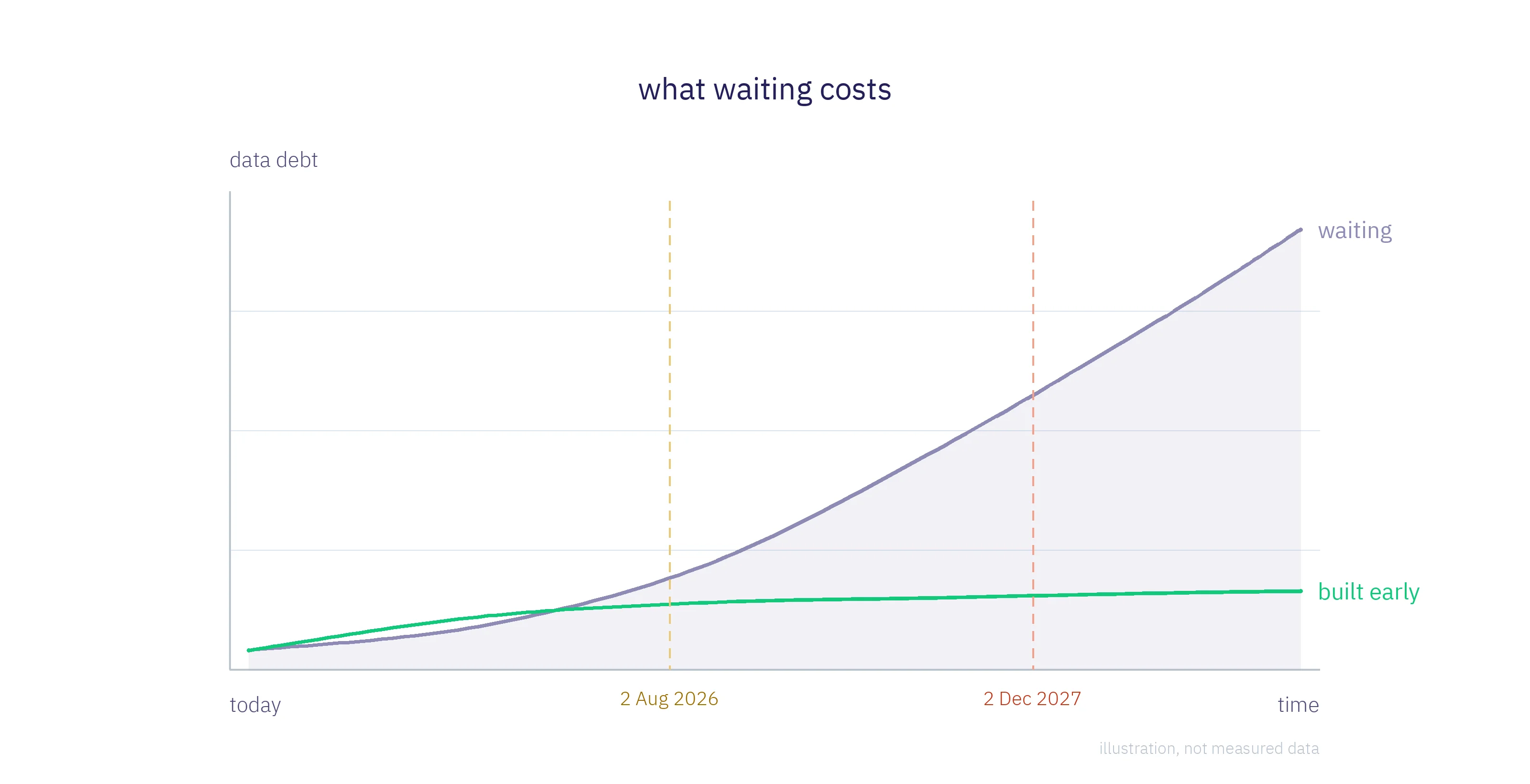
Here's the asymmetry worth sitting with. The firms shipping AI fastest in 2026 aren't the ones with the biggest compliance teams. They're the ones that built the data foundation early, because that foundation is what makes both speed and audits cheap. Every quarter spent waiting adds data debt: more undocumented pipelines, more models whose training data nobody versioned, more decisions with no trail. The AI Act's dates don't move because your roadmap slipped [3].
If your AI initiative is somewhere between pilot and production and the honest answer to "Could we survive an audit of this?" is a shrug, that's the readiness question to resolve first. We work with fintechs on exactly this seam, starting with a data audit that maps what you have against what production and the regulator will demand of it. The pilots were the easy part. Production is where the advantage is.
Frequently asked questions
Is AI adoption in fintech really that widespread?
Yes. The EU banking supervisor reports 92% of EU banks already deploying AI, and more than half run generative or agentic AI in customer-facing processes [1]. What is rare isn't adoption; it's systems that deliver production results a board or auditor would sign.
Why do AI projects stall before production?
Rarely because of the model. The EBA names the real blockers as input data quality, data governance, reliance on third parties and human oversight [1]. McKinsey's analysis of 600+ initiatives points the same way: the fix is data foundations, not better models [2].
What does AI compliance in fintech look like from 2026?
Dated obligations. From 2 August 2026, AI transparency rules apply. From 2 December 2027, the high-risk regime covers areas like credit scoring [3]. Practically, it means three capabilities: knowing which data trained your model, monitoring how it behaves by segment, and being able to reconstruct any automated decision on demand.
Does this apply only to banks or to smaller fintechs too?
To both. The rules attach to what the system does (a credit decision is high-risk, whoever makes it), not to company size. The difference is that a smaller company can build the foundation faster, one process at a time, without a transformation program.
Where should a company start?
With data lineage, not with a new model.
 Map where your data comes from, who owns it, and what changed, on one process. Then add performance monitoring and decision logging. The honest first question is simpler still: could the AI you already run survive an audit today?
References
[1] European Banking Authority, "Rising application of AI in EU banking and payments sector", September 2025 (92% of EU banks deploying AI; top challenges incl. input data quality, data governance, human oversight).
[2] McKinsey & Company, "Banking trends snapshot: how banks can catch up to fintechs on AI", November 2025 (600+ initiatives, ~10,000 institutions; fintechs ~40% of dataset, ~70% of AI initiatives).
[3] European Commission, "AI Act | Shaping Europe's digital future" (application schedule: transparency 2 Aug 2026; high-risk incl. credit scoring 2 Dec 2027).
Share this article on:
More insights
Article
Cross-industry
AI Consulting
Data Engineering & Analytics
9 min read
What AI sprawl is, why its return stays invisible, and four moves to control it with the people you have. Level 2 of the EBS AI-maturity ladder.
Article
Cross-industry
AI Consulting
6 min read
AI running on accounts that your company does not hold. This article explains what it is, how it spreads, and how to take it to the next level. (AI-maturity series lvl 1)
Article
Cross-industry
AI Consulting
Regulatory & Compliance
7 min read
Is AI overhyped? Yes, as a purchase promise. No, as what a prepared company can do with it. The evidence, and what the first step off level zero takes.

Article
Cross-industry
Cloud & DevOps
Data Engineering & Analytics
8 min read
Moving a 15 TB production Aurora PostgreSQL cluster from 14 to 18.3 with sub-minute cutover: Blue/Green prerequisites, worker math, and the storage trap.

Article
EdTech
Security
Regulatory & Compliance
11 min read
Student records are among the most sensitive data any institution holds, and the easiest to underprice. What a school breach really costs, and where to start

Article
EdTech
Systems Integration
Data Engineering & Analytics
11 min read
Legacy administrative platforms across European education institutions were procured separately with no shared architecture, creating education data silos that force daily manual reconciliation, while 70% of IT capacity is consumed maintaining these systems.
Article
FinTech
Systems Integration
Regulatory & Compliance
8 min read
How Open Banking works after PSD2 and what the API economy means for banks, instant payments, and system architecture in Europe.

Article
Retail & eCommerce
Data Engineering & Analytics
AI Consulting
8 min read
Big Data is changing the retail industry. (internal expertise) Learn how businesses use data to make smarter decisions, create personalized experiences, and improve customer service with real examples of BigData applied to today’s fast-moving market.

Article
Retail & eCommerce
Regulatory & Compliance
Security
Business Strategy
8 min read
Learn what an eCommerce audit includes and why EU-linked retailers need it in 2025. Covers security, PCI DSS, ISO 27001, SCA, fraud risk, and business continuity.

Article
FinTech
Process Automation
Systems Integration
Regulatory & Compliance
9 min read
Banking process automation enables financial institutions to replace manual approvals with low-code workflows that integrate payments, lending, and compliance in real-time. It ensures PSD2 and KYC/AML compliance while enabling instant payments, such as SEPA Instant and Moldova's IPS, for faster and safer banking.

Article
Retail & eCommerce
Business Analysis
AI Consulting
6 min read
How omnichannel strategies and AI-driven personalization help retailers connect online and in-store experiences, improve operations, and keep shoppers coming back.

Article
Retail & eCommerce
AI Consulting
Data Engineering & Analytics
6 min read
Find out how technology-driven personalization x AI creates closer relationships with customers.

Article
Retail & eCommerce
Data Engineering & Analytics
AI Consulting
6 min read
Reach customers wherever they shop with AI and real-time data. Discover how targeted marketing, a seamless online and offline shopping experience, and predictive analytics can personalize recommendations and boost sales. Our retail expert, Olga, shares practical insights and strategies to help you take your store digital. Read the full article for actionable tips and real-world examples.

Article
Retail & eCommerce
Business Strategy
Digital Transformation
Data Engineering & Analytics
7 min read
Learn about personalized customer experiences, data-driven decision-making, omnichannel approaches, AI/AR and real stories of how we help businesses implement new business models.

Article
Cross-industry
Cloud & DevOps
Data Engineering & Analytics
IT Consulting
9 min read
Data storage has evolved from paper/floppy disks to cloud tech. See through our experts' experience what cloud migration is, how can you use it for your business and what you get from migrating your data to the cloud.

Article
Cross-industry
Programming Languages
Data Engineering & Analytics
7 min read
The world of Data Sciences’ is an ever-changing place, new applications and requirements appear on a daily basis. With all that, a professional SQL-guru who can optimize their interactions with databases is valued in his weight in gold. Luckily for us we have just such master. In this post we hope to explore the world of ORMs (particularely Django ORM vs SQL Alchemy) with our Python specialist and get his opinion on which he prefers! And provide some nifty examples to boot.

Article
Retail & eCommerce
Security
Regulatory & Compliance
8 min read
We’re talking about data privacy in all its glory – why it matters to you and your customers, and where it’s all heading in the future. Because this is a part of a series, we’ll try and focus mostly on the aspects that affect us in the eCommerce domain! Let’s discuss why there’s so much hubbub around the topic of data privacy. This is not to say this discussion is anything new for the world, it’s been brought up countless of times, and the issue of “government spying” on you is as old as the idea of structured government is.

Article
Cross-industry
AI Consulting
Process Automation
7 min read
From ELIZA to modern AI: explore chatbot evolution in customer service. Learn how 1.4 billion users benefit from automated support and instant query resolution.

Article
Cross-industry
Data Engineering & Analytics
Software Development
7 min read
Peeling this BASICs digital onion, we’ve left some details out (particularly in our last article). As stated, data-centric and data-driven applications deserve their series, a journey we’re kicking off today. Before talking about BigData, strategies and mechanics, let’s filter the messy data-centric vs data-driven dilemma.
Article
Cross-industry
Security
Regulatory & Compliance
In this article, Alex shares his journey through the implementation of a Clean Desk and Clean Screen Policy during his company's ISO 27001 certification process. Initially resistant to the changes, Alex reflects on the impact of the policy on his workflow, physical security habits, and overall job experience. The transition, while initially perceived as a challenge, ultimately led to a cultural shift within the company, emphasizing the importance of information security and organizational efficiency.